Single Speed vs Variable Speed Pool Pump Cost Compared
Moving the same water, a 2,000 W single-speed pump costs about $66 a month; a certified variable speed pump about $8. The math, matched by gallons.
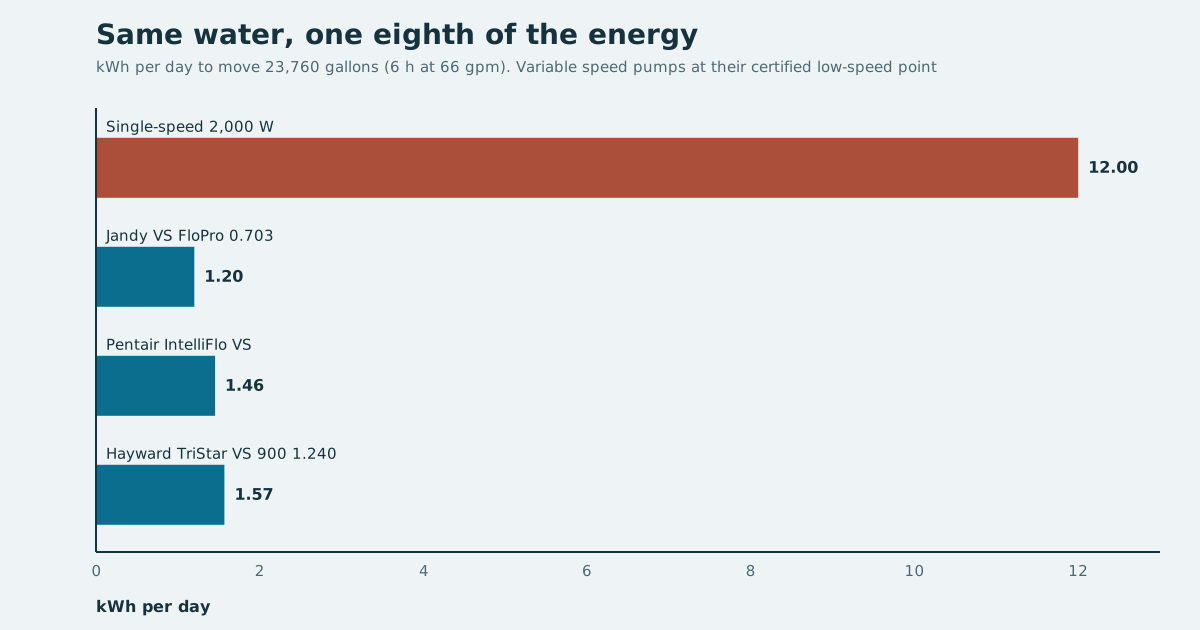
In the single speed vs variable speed pool pump cost comparison, the variable speed pump wins by roughly eight to one when both move the same amount of water. A typical 2,000-watt single-speed pump running six hours a day costs about $66 a month at the July 2026 U.S. average electricity price. A median certified variable speed pump moving the same gallons at low speed costs about $8.
The comparison is often done badly, by putting one pump on high for six hours against another on low for six hours. The two then move very different amounts of water. This page matches them by gallons instead, shows each step of the arithmetic, and then checks the result against a real retrofit that the Department of Energy documented.
The two pumps being compared
Single-speed baseline. The Department of Energy's Building America guide on pool pump retrofits gives a typical 1.5 hp single-speed pump as drawing about 2,000 W at 3,450 rpm and moving about 66 gallons per minute. It reports one metered pump at 2.07 kW, and a range of 1,500 to 2,500 W for standard pumps depending on the motor. There is no single-speed in-ground filter pump on the ENERGY STAR certified list, so the federal guide is the best citable baseline.
Variable speed. The median of 108 distinct certified in-ground designs draws 117.66 W at its low-speed test point, measured at a median 31.2 gpm. For named examples, the Hayward TriStar VS 900 at 1.240 hhp draws 124.48 W at 31.41 gpm, and the Pentair IntelliFlo VS draws 114.79 W at 31.24 gpm. The certified list spells that Hayward record "TirStar VS".
Single speed vs variable speed pool pump cost, matched by gallons
Six hours at 66 gpm moves 23,760 gallons. Here is what each pump costs to move that same volume, at 18.31¢/kWh over 30 days.
| Pump | Speed | Hours to move 23,760 gal | kWh per day | Cost per month |
|---|---|---|---|---|
| Single-speed, 2,000 W | Full, 66 gpm | 6.0 | 12.0 | $65.92 |
| Median certified variable speed design | Low, 31.2 gpm | 12.7 | 1.495 | $8.21 |
| Hayward TriStar VS 900 (1.240 hhp) | Low, 31.41 gpm | 12.6 | 1.569 | $8.62 |
| Pentair IntelliFlo VS (1.883 hhp) | Low, 31.24 gpm | 12.7 | 1.455 | $7.99 |
| Jandy VS FloPro (0.703 hhp) | Low, 24.79 gpm | 16.0 | 1.201 | $6.60 |
The variable speed pump runs about twice as long to move the same water and still uses about one eighth of the electricity. That is the speed-to-power relationship ENERGY STAR describes: halve the speed and the energy falls to about one eighth. The figure at the top of this page draws the same comparison as bars.
Over a 180-day season at the same rate, that is about $396 for the single-speed pump against about $49 for the median variable speed design. Price your own pump with the energy cost calculator.
If you run the single-speed pump fewer hours
Plenty of single-speed owners run less than six hours to save money. The variable speed pump matched gallon for gallon still wins at every length, because its cost per gallon is so much lower.
| Single-speed hours | Gallons moved | Single-speed cost per month | Median variable speed design, same gallons |
|---|---|---|---|
| 4 | 15,840 | $43.94 | $5.47 |
| 6 | 23,760 | $65.92 | $8.21 |
| 8 | 31,680 | $87.89 | $10.95 |
| 12 | 47,520 | $131.83 | $16.42 |
At every row the variable speed design uses about 12.5% of the single-speed pump's energy. The ratio does not change with hours, because both costs scale with the gallons.
A documented retrofit
The same DOE guide includes a case study of a real pool where the old pumps were replaced. The old single-speed filtration pump drew 2,092 W. The replacement variable speed pump drew 221 W during low-flow filtration and 650 W when sped up to run the pool cleaner. Pump energy fell from 16.0 kWh a day to 3.3 kWh a day, about a fifth of the original.
The case study saving is smaller than the eight-to-one figure above, and the reason is useful. The new pump does not only filter at low speed: it spends part of each day at a higher speed for the cleaner, and the guide's own figures put that cleaner draw at nearly three times the filtration draw. Every hour at a higher speed narrows the gap. The low-speed comparison is the best case; a pool with demanding equipment will land somewhere between it and the case study.
The caveats that change the gap
This is test-rig wattage. The certified figures assume standard plumbing resistance. In real pipes the variable speed pump will draw somewhat different watts at the same flow. The gap stays large, but your exact savings will differ.
Slow is not always enough. A heater, salt cell, waterfall or suction cleaner may need a higher flow than the low test point. Two hours a day at the median high-speed draw of 742.25 W adds about $8 a month.
Your old pump may not draw 2,000 W. Smaller or newer single-speed pumps draw less, which is why the DOE guide gives a 1,500 to 2,500 W range. Check your pump's label for amps and volts, or have it measured, before trusting any savings figure.
ENERGY STAR quotes a smaller saving, against a different baseline. Its pool pump page says certified in-ground pumps use about 20% less energy than standard pumps. That figure answers a different question from the single-speed comparison here, and the page does not define "standard" in the passage that states it. Use it for comparing certified with non-certified new pumps, and the figures on this page for replacing an old single-speed pump.
Savings at different electricity rates
Both costs scale with your rate, so the dollar saving does too. At the matched-gallons figures above, the monthly saving from replacing a 2,000 W single-speed pump run six hours a day with the median certified design is:
| Rate per kWh | Single-speed, 6 h | Median variable speed design | Saving per month |
|---|---|---|---|
| 12¢ | $43.20 | $5.38 | $37.82 |
| 18.31¢ | $65.92 | $8.21 | $57.70 |
| 25¢ | $90.00 | $11.21 | $78.79 |
| 35¢ | $126.00 | $15.70 | $110.30 |
Rates other than 18.31¢ are round illustrative numbers, not quoted prices for any place. Your own bill shows your rate.
Can you still buy a single-speed pump?
For most in-ground sizes, effectively no. Federal standards that took effect for pumps manufactured from July 19, 2021 set a minimum WEF that, according to manufacturer Jandy's guide to the rule, most single- and two-speed pumps of 1.0 total horsepower or more cannot meet. A later rule extends variable-speed requirements to replacement pool pump motors. The details, and what they mean if your old pump fails, are in the DOE pool pump rule explained.
The certified list reflects it: of 330 in-ground filter pump records, every one is variable-speed or multi-speed. The only single-speed pumps on the list are booster pumps for pressure-side cleaners and three small above-ground records.
Two-speed pumps
Two-speed pumps sit between the two. There are none among the certified in-ground filter pumps, so the comparison has to come from above-ground models. The ten distinct two-speed above-ground designs draw 195 W to 390.9 W at their low test point, median 251.7 W. Variable-speed above-ground designs draw 62.3 W to 152 W, median 82.7 W.
A two-speed pump's low setting is a big improvement over a single-speed pump at full speed, but it is a fixed speed, often higher than the pool needs. A variable speed pump can be set lower, and the power saving at lower speeds is steep.
How many hours a variable speed pump needs
The longer run time is the part of the switch that surprises owners. A worked example makes it concrete. Take a 20,000-gallon pool and a target of moving its whole volume once a day.
- A 2,000 W single-speed pump at 66 gpm needs about 5.05 hours, using about 10.1 kWh: roughly $55.48 a month at 18.31¢/kWh.
- The median certified variable speed design at its low test point, 31.2 gpm, needs about 10.7 hours, using about 1.26 kWh: roughly $6.91 a month.
So the variable speed pump runs about twice as long for about an eighth of the cost. If you set it to run the same short hours the old pump did, you will move only half the water, and the pool may not stay clear. The turnover calculator works out the hours for your own pool volume and target.
Estimating what your current pump draws
Before trusting any savings figure, find out what the old pump really uses. A single-speed pump runs at one speed, so a single number is enough.
The motor label shows volts and amps. Multiplying them gives an upper bound on the power drawn; the real figure at normal load is usually somewhat lower. The DOE guide estimated its 1.5 hp example at about 2,108 W from the motor's horsepower and service factor, and reports a metered reading of 2.07 kW for the same kind of pump. A clamp meter reading on the pump circuit, taken by someone qualified to work on it, gives the actual draw.
Once you have the old pump's watts, the comparison on this page scales directly: a 1,500 W pump costs three quarters of the 2,000 W figures, a 2,500 W pump a quarter more.
Questions to answer before you switch
- What does your current pump draw? The savings scale with it. A smaller single-speed pump saves less when replaced.
- How many hours does it run now, and how many months a year? A pool open four months saves a third of what a pool open all year saves.
- What else runs on the pump? A heater, salt cell, waterfall or suction cleaner may need a higher speed for part of the day, which narrows the gap.
- Does your control system support a variable speed pump? Some older timers and automation panels need a board change or a relay.
- Is there a rebate? Utilities that offer one usually require a certified model; check before buying, not after.
Payback: what the data can and cannot say
The energy saving above is about $58 a month during the months you run the pump, on these assumptions. Whether that pays back a new pump depends on the pump price, installation and any electrical or automation work, which this site does not have reliable figures for. Check your electric utility for a rebate on certified pumps before you buy. Then divide the installed cost after any rebate by your own monthly saving to get your payback in swim-season months.
To size the replacement correctly, start from the flow your pool needs with the turnover calculator, not from the horsepower of the old pump. Pool pump hydraulic horsepower vs total horsepower explains why the old number can mislead.
The short version
- Matched by gallons moved, a certified variable speed pump at low speed uses about an eighth of the electricity of a 2,000 W single-speed pump.
- That is about $8 a month against about $66 at the July 2026 U.S. average rate, for six hours of single-speed running.
- Expect to run the variable speed pump about twice as many hours to move the same water.
- High-speed hours narrow the gap; a documented retrofit with a cleaner cut pump energy to about a fifth, not an eighth.
- Since July 2021, new full-size in-ground pumps are in practice variable speed anyway.
Sources
- DOE Building America, Measure Guideline: Replacing Single-Speed Pool Pumps with Variable Speed Pumps for Energy Savings (Hunt and Easley, 2012): single-speed draw, flow and wattage range, and the retrofit case study.
- ENERGY STAR Certified Pool Pumps dataset, retrieved 17 October 2026: all variable speed and two-speed figures.
- ENERGY STAR Pool Pumps: the 20% figure and the speed-to-energy relationship, retrieved 17 October 2026.
- EIA Electric Power Monthly, Table 5.3: July 2026 U.S. residential price, retrieved 17 October 2026.
- 10 CFR 431.465: federal pool pump standards and compliance date.
- Jandy, guide to the DOE pool pump regulations: which pump types the standard rules out in practice.
Matched gallon for gallon, the single speed vs variable speed pool pump cost gap is about eight to one in favor of variable speed; work out your own with the energy cost calculator.
Frequently asked questions
How much cheaper is a variable speed pool pump to run?
Matched by gallons moved, a median certified variable speed design at low speed costs about one eighth as much as a 2,000 W single-speed pump: about $8 a month against about $66, at 18.31 cents per kWh.
Why does a variable speed pump run longer?
At low speed it moves fewer gallons per minute, so it needs more hours to circulate the same volume. Power falls much faster than flow as speed drops, so the longer run still uses far less energy.
Is a two-speed pump as good as a variable speed?
There are no two-speed in-ground filter pumps on the certified list. Two-speed models on the list are above-ground pumps drawing 195 to 391 W at their low point, against 62 to 152 W for above-ground variable speed designs.
Does running a variable speed pump on high save anything?
Much less. The median certified design draws 742.25 W at its high test point, more than six times its 117.66 W low-speed draw, so nearly all the savings come from hours spent at low speed.